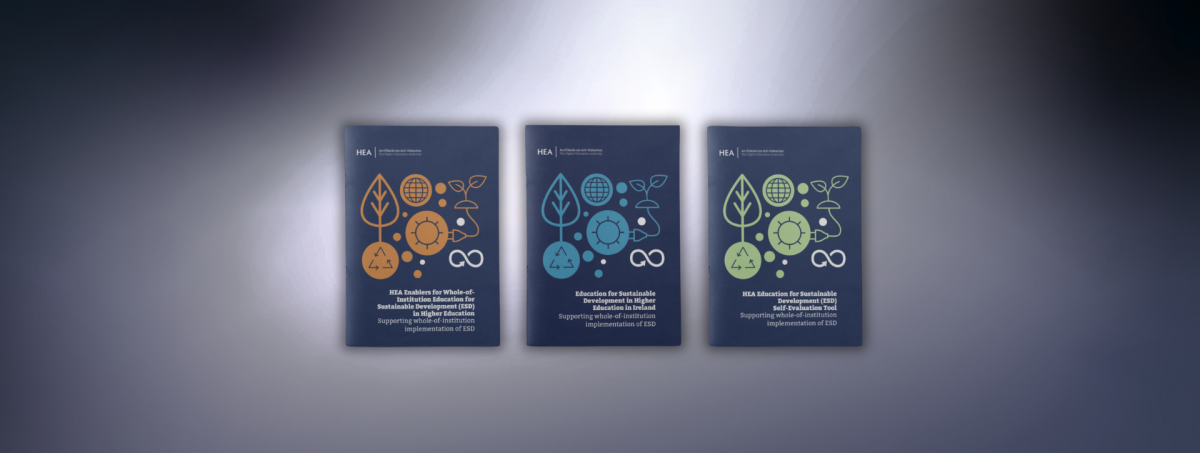
The Higher Education Authority launched its Education for Sustainable Development Framework for Higher Education on 29 July 2026, giving Irish higher education institutions a shared structure for embedding sustainability across curriculum, campus and community for the first time. The Framework supports Ireland's Second National Strategy on Education for Sustainable Development to 2030 and aligns with UNESCO's global ESD framework. For institutions competing for students, staff and industry partners, this arrives at a useful moment: employers are already asking for sustainability-literate graduates, and a shared national standard is a genuine differentiator rather than another compliance document to file away.
This is a commercial opportunity dressed as a policy update, and educational leadership should treat it that way. Three things make it worth acting on quickly: it replaces scattered internal effort with one shared standard, it connects to what employers already say they want, and it ties curriculum together with campus operations rather than treating them as separate projects. Institutions that move first stand to gain the clearest advantage.
The evidence base behind the Framework is unusually solid for a sector-wide tool. It draws on the ESD Landscape Report published in January 2026, which reviewed HEA Performance Agreements, institutional strategies and climate action roadmaps across the sector, alongside two sector workshops and a public feedback process running from November 2025 to February 2026. That level of consultation means institutions adopting it work from a framework the sector itself helped build, reducing the risk of duplicating effort each institution would otherwise carry alone.
Employer demand gives the Framework its commercial edge. Skillnet Ireland's own research found that 66% of Irish businesses regard climate and sustainability skills as an important future requirement for their workforce. Institutions that can point to a structured, nationally recognised approach to sustainability in education have a stronger story to tell industry partners scouting graduate talent pipelines, corporate research collaborations and executive education contracts.
The Framework's design also rewards institutions with joined-up operations. It links curriculum, campus and community engagement into one coherent structure, building on the Strategic Alignment of Teaching and Learning Enhancement fund, which has supported sustainability initiatives since 2022. Institutions with an existing track record under that fund now have a ready-made head start rather than a fresh project to launch from zero.
Three actions follow for higher education leadership. First, map existing sustainability initiatives against the new Framework now, consolidating scattered pilot projects into one institutional narrative for prospective students, staff and industry partners. Second, industry-partnership and careers offices should feature the Framework directly when courting corporate partners seeking sustainability-literate graduates. Third, track the ESD Insights Series launching in September 2026 to benchmark progress against peer institutions early, before this becomes a baseline expectation across the sector.
The ESD Framework gives Irish higher education a genuine, ready-made differentiator at the exact moment industry demand for sustainability-literate talent is rising. Leadership that acts on it now stands to strengthen both academic reputation and industry partnerships well ahead of institutions that wait for it to become standard practice.




.png)

